Understanding the medical concepts and clinical significance of ICH subtypes
Intracranial Hemorrhage (ICH) is a fatal hemorrhagic stroke condition characterized by bleeding within the skull. It represents a critical medical emergency that requires rapid diagnosis and immediate intervention to prevent permanent neurological damage or death.
ICH can occur in various locations within and around the brain, each presenting unique clinical challenges and requiring specific treatment approaches. The prognosis and treatment strategy depend heavily on the location, size, and cause of the hemorrhage.
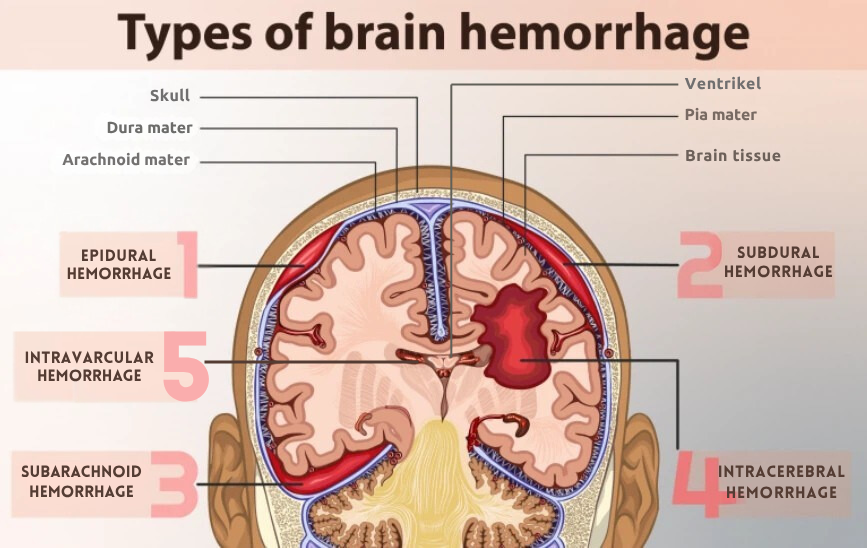
Understanding ICH subtypes requires knowledge of the brain's protective layers, called the meninges. From outermost to innermost:
Diagram showing layers from skull to brain tissue with ICH locations
This system detects five distinct types of intracranial hemorrhage, each with unique characteristics, causes, and clinical implications.
Bleeding between the skull (calvarium) and the dura mater, typically caused by arterial injury following skull fracture.
Often presents with the classic "lucid interval" - brief unconsciousness, followed by apparent recovery, then rapid deterioration. Requires urgent neurosurgical intervention. Excellent prognosis if treated before herniation.
Blood collection between the dura mater and arachnoid mater, commonly caused by tearing of bridging veins.
Can be acute (symptoms within 72 hours) or chronic (develops over weeks). Particularly common in elderly population. May require surgical drainage depending on size and symptoms.
Bleeding in the subarachnoid space between the arachnoid and pia mater, most commonly caused by ruptured cerebral aneurysm.
Classic presentation: sudden "thunderclap" headache - worst headache of one's life. High mortality rate (40-50%). Risk of rebleeding and delayed vasospasm. Requires immediate neurosurgical evaluation and aneurysm securing.
Bleeding within the brain's ventricular system where cerebrospinal fluid is produced and circulates.
Can obstruct CSF flow leading to acute hydrocephalus. High mortality rate (50-80%). May require urgent ventricular drainage. Presence of IVH significantly worsens prognosis of ICH.
Bleeding directly within the brain tissue (parenchyma), representing the most common form of spontaneous intracerebral hemorrhage.
Accounts for 10-15% of all strokes with 30-day mortality of 35-52%. Presents with sudden focal neurological deficits depending on location. Treatment depends on size, location, and patient's clinical condition.
ICH progression can be rapid. Early detection within the "golden hour" significantly improves survival rates and neurological outcomes.
Accurate subtype identification guides appropriate treatment strategy - surgical intervention, medical management, or observation.
Different ICH subtypes have varying mortality rates and recovery trajectories. Early classification helps in patient counseling and resource allocation.
This page provides educational information about intracranial hemorrhage for academic and learning purposes. It is not intended to provide medical advice or replace consultation with qualified healthcare professionals. All medical decisions should be made by licensed physicians based on comprehensive patient evaluation and clinical judgment.